Showing posts with label books. Show all posts

Sunday, November 20, 2011

Interview: Author Ashokamithran


Ashokamithran is one of the most celebrated writers in post-independence Tamil literature. As part of a writing project on translations, I had an opportunity to meet him to get his thoughts on translations. I decided to convert this into a full fledged interview for this blog.
                                                 
Ashokamitran, whose real name is Thyagarajan, has written eight novels and numerous short stories.  He won the "Sahitya Akademi" award in 1996 for his work "Appavin Snegidhar", a collection of short stories.  He worked in the Tamil film industry in the 50s and 60s and then went on to become a full time writer.  At 80, he is still bursting forth with energy when he talks about writing. Though his voice is feeble and sometimes broken, his memory is still impeccable. He recounted many stories, a few of which am sharing here. And yes, this was my first ever interviewing experience.

How did you start off? Have you always wanted to be a writer?
In those days, writing was very much part of everyday life. Nowadays, telephony and internet has taken out writing from our daily routine. We used to write letters regularly. Office work also involved a lot of writing- memos, notes etc. Now we have paperless offices. In school also, we were encouraged to come up with our own works of creativity.

Have you ever thought about doing any other work, other than writing?
No. My father died prematurely and I was quite young at that time. I was in Secunderabad at that time. I lacked elder's guidance. So, I had to make my own decisions. Then I shifted to Chennai and worked in the film industry for about a decade. And then, slowly writing began to take up most of my time. So I left the industry and took up writing full time.

Some of your books are set in the film industry.
Yes, I've written quite a lot about it. I was working as a public relations officer. Replying to letters was my main job there. We used to get a lot of letters from students and others asking for permission to visit the studio. I was supposed to reply that they can't visit the studio, at the same time I had to convey it pleasantly. So we had a convoluted way of writing those replies-diplomatic, feel good replies. Film shooting was at private places. Now they shoot everywhere from Chennai streets to Alaska.

I was reading the translation of your book 'Karaintha Nizhalgal'(star crossed). There was this scene where one of the technicians brings his whole family to the studio to watch the shooting.
Yes, yes. But we used to avoid the general public. Then, there will be officials whom we couldn't say 'No' to. For example, this income tax officer who used to insist on visiting the studio often. We couldn’t say no to an income tax officer! There was this one time in 1956 when Chinese premier Chou En Lai was visiting Chennai and he wanted to visit the studio. So we made arrangements for the visit. The problem was, at that time the young Dalai Lama was also visiting. The film that was being shot then was about kings and people who were loyal to the king. Chou En Lai did not like it because it went against his brand of communism. On the other hand, Dalai Lama was a pleasant fellow and he enjoyed every bit of the song and dance.

So, you had started writing while you were in the industry?
Yes. I started with short stories. Then, I started writing a novel for some contest. I couldn't complete it on time. I completed it about ten years later, the novel 'Viduthalai'(liberation). That was a bit pompous.

But, I've read somewhere that you concentrate more on intense experiences of small lives than grand sacrifices, public protest and posturing.
Yes, yes. That's very true. I don't carry an explicit social message. The reader can derive anything he wants. Otherwise, the essence of the story is lost. Anyway, am not a very popular writer!

Whatever I've read about you and heard from others, tells me otherwise
(laughs) It’s a very slow process. As a writer, you become known to people very gradually.

After 1980s, your books began to be translated more. Your fame spread outside the state during this period?
Yes, I became known in Bombay, Delhi, Calcutta after that. I think I became more known in those places than in Tamil Nadu. That was the time when there were a lot of fights over languages, the anti-Hindi agitations and such movements. There was so much antagonism against the Hindi speaking people here and vice versa too. They make a fuss over these languages all the time. Each language has its own beauty. I've translated the biographies of Bankim chandra chatterjee and the Mother of Aurobindo ashram. I've also translated Anita Desai's 'Fire on the mountain'. It was not a great novel, but it did win a Sahitya academy award. Whatever fuss they make about ours being a classical language, we are yet to produce a work comparable to those of Sarat Chandra Chatterjee. Devdas is one of his weaker novels. Even to its level, we haven't reached.

That's the only work of his that most people know about.
Yes. He never prescribed drinking as a solution to lost love. It was a written in a very realistic framework. But somehow, people interpreted it in the wrong way. He was extremely unhappy. He used to say that if I had known that people would interpret it this way, I would never have written that. So, what I was saying was, in Tamil we have big novels which run to thousands of pages, but those can't match the sublime quality of his work. Much needs to be done here. In Tamil, we do have some great poetry though.

You are one of the few fulltime writers in Tamil? Why don't we have more people who take this up as a profession?
How will you survive as a writer in this age! And there are no institutions which gives jobs to writers. Even your college would n't give me a job. Also, you wouldn't always get paid when others use parts of your work. For example, many situations from my books have appeared in a number of films but they have never credited me. It can be by accident, but this is what happens.

You had said long time back that people with integrity can never make a film. Was it based on your experience in the industry?
Yes, It is difficult to be honest in this industry. In my book 'karaintha nizhalgal', based on the film industry, the character Reddiar who is a producer is a straight forward man. He goes bankrupt and he never completes his project. There are thousands of films that are in different stages of completion. There are thousand others which are completed, but no one is ready to buy it. There is so much happening behind the scenes.

So, how do you feel about the current state? The studio system that existed here has crumbled. What are your thoughts on the monopoly that is running the industry?
It is financially in the clutches of a team, the Marans and their cousins. Now they are selling it as an international product rather than catering to the local audience. I don't understand the films these days. I still remember the days of going to theater to watch Chaplin or Fellini.

You've written in your book 'Mansarovar' that "A man living in his hometown is under various constraints. This is why everyone seeks to be free, live in anonymity away from their native towns." Was it written from your own experiences?
It is true for everybody, not only a writer. In a place where you are not known, you can do anything. The anonymity helps. It is a fact. But, somebody has to point it out. That is what I did.

You moved to Chennai from Secunderabad, where you spend your early years. The novel '18th parallel' was set there. So, the early days must've influenced you during writing the book.
18th parallel is the line that passes through Hyderabad. When you create a character, you have to provide some context, some location. It was set in the background of the Indian govt taking over Hyderabad after independence and the preceding turmoil. Not much has been written about the place. It was my first book to be translated to Telegu. It was received with great respect there.

So, are you a writer who writes mostly from things which you've experienced, places you've seen?
Yes, experiences feeds into your writing all the time. And also, you’ve to give a context or a background to your characters. So it’s easier to set them in familiar places.

Are you writing anything now?
I am suffering from cramps for the past weeks and I am tired too. So haven't written much recently. Before that I wrote a story that was published in some magazine few weeks back.

And then I made a request for a click. What happened next floored me, and also showed how down to earth this man is. He told me-“Wait. I’ve to respect the camera and the photographer. So, let me wear a clean shirt, comb my hair and come”. Even after I requested him not to take all those troubles, he insisted on it and within a minute, came dressed in a white shirt and with neatly combed hair. As I started clicking, he was worried whether there was enough light in the room and was even prepared to walk out into the balcony. Those troubles, I didn’t let him take. And so, an interview which was supposed to finish in 20 minutes went on for an hour...

As I walked out to my bike, he was there waving from the balcony. A lesson learned in humility…


Thursday, November 10, 2011

Book Review: Sikandar


When I finished reading the novel ‘Sikandar’ the past week, little did I know that it was something prophetic. Originally written in Bengali by Binayak Banerjee and translated into English by Soma Ghosh, it chronicles a reality show called 'sikandar' modeled on the same lines of Bigg boss (yes, with that stupid extra G). Being an ardent hater of all kinds of 'reality' shows, I was reluctant to read this. But then, lines of praise like 'remarkable insight into the depths of human existence where passing personalities engage in a life and death existential struggle to attain one's true human destiny' on the blurb, made me read this. And by the end, I was disappointed!

Coming back to the prophecy, I was quite surprised yesterday when Sami Agnivesh announced that he is going to enter bigg boss. My first reaction was- ‘this must be the hangover from that book’. Because, one of the ten contestants in the ‘sikandar’ reality show is ‘Swami Samyuktanand’, an ascetic like Agnivesh. I guess Agnivesh must have got this book through the ‘book reviews’ program and took it to heart.  Like the character, Agnivesh seems to have plans to preach at the wrong place. This comment from him yesterday is a primer for what to expect from him- "The girls inside the house don't seem to have any social responsibility.  I want to make them realize just how many girl children are killed in the womb and how many women are burnt alive in the name of sati”.

Enough of Agnivesh’s ramblings. The first problem with the book is that it confuses you right from the introduction.  The introduction throws at you a set of ten highly confusing Bengali names and their brief background. By the time you are done with it, you will be highly disoriented and you will have to keep on going back to these introductions to make sense of who is what and which, unless you are related to these people. Talking about relations, another funny thing is that all of the ten contestants are related or rather know each other in one way or the other. Some had shared fights. Some had shared beds. Some had shared stages. And it is an eclectic mix of characters- actor, industrialist, former revolutionary, prostitute etc.

I read this one right after I finished Jose Saramago’s classic ‘Blindness’, which also handles a similar, but REAL situation. There also, a group of people are quarantined in a building after a mysterious contagious blindness grips a place. It chronicles the change in their behavioural patterns, captures their quirks and builds it up into a larger picture of how humans react in peculiar situations, with the use of sublime prose peppered with philosophical overtones. In ‘Sikandar’ also, the author seems to have similar intentions, but the ‘pearls of philosophy’ from every other character looks out of place at several passages. Having said that, I did like certain sections and certain characters, most notably Rangajoba Sanyal, the ex-revolutionary who is in the show to get enough money to cure her daughter’s cancer.  But, most of the characters are half developed, especially the ones who are eliminated from the show in the earlier stages itself.

By the time I finished the book, I had only this to say- “So?” I kept on reading the book expecting for something to ‘happen’. There were too many loose ends and many things which were not explained. Having recently done a project on translations and the problems associated with it, I have a feeling that some things were actually ‘lost in translation’. How I wish I has some Bengali knowledge! But then, I don’t want to read another novel on ‘reality shows’, which are anything but REAL!

On a serious note, Swami Agnivesh’s big boss news comes as a disappointment. After his recent pivotal role as the Govt’s mediator with the Maoists and that epic NDTV show in which he silenced Barkha Dutt, this was something that he could’ve avoided.

This review is a part of the Book Reviews Program at  BlogAdda.com. Participate now to get free books!

Monday, September 26, 2011

Book Review: The Shiva Trilogy


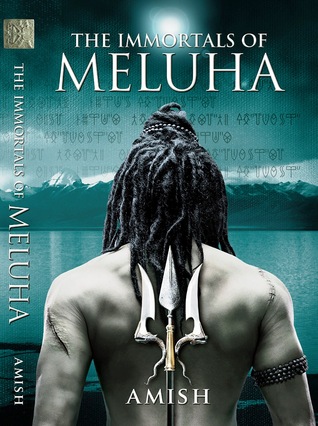
The Immortals of Meluha

My only reason for picking up 'The immortals of Meluha' was the eyeball grabber of a cover. Well, it required something like that to catch my attention, simply because this was not my kind of reading. To be frank, I was taken aback a bit at first. A pot smoking Shiva uttering words like 'Dammit', came in as a surprise. Maybe, what I liked in the book was also the same- a shiva who was more of a human than a mythical God, a Shiva with all the confusions and oddities in behaviour that are characteristic of humans. And then, a whole 'nauseatingly perfect' community of people pinning all their hopes of redemption on the arrival of a blue-throated man from a foreign land. It works well, being the page turner that the book is, setting the context, fixing the geography and ethcing the characters for the next parts of the trilogy.


 The Secret of the Nagas


Secret of Nagas takes off right where the first book left off, landing you in the middle of some serious action. Amish then proceeds to redefine the true meaning of evil. A heartening thing about the trilogy till now is that the author has avoided the typical 'black & white' picturisation of good and evil, the way it was done in many of our old texts. Most of us have grown up reading the simplified versions of the epics, with the likes of Raavana and Duryodhana seen as personifications of evil. Visual adaptations of these epics also follow the same line. There is no scope for the good qualities that they possessed. And all of it remains unknown to us, until we read those alternative texts, which are not that popular.

The Shiva trilogy, though not anywhere near in stature or content when compared to those alternative texts, triumphs in not giving us any clear cut demarcations of good or evil. Just when you decide in your mind that "here comes the bad guy!", the story turns on its head revealing a completely new side of the 'bad guy'. There is goodness and God in everyone. At the same time, no one is a complete paragon of virtue. Even Shiva is not infallible. Even he is prone to uncontrolled and misdirected anger. In the first part, you are led to believe that Meluhans are the perfect race except for aberrations like the 'vikarma tradition'. Then slowly, you get to see the problems that come with such insane levels of perfection. Then you see the creativity of the unorganised Chandravanshis and you are suddenly thinking from an entirely different angle.

Shiva's is unsurprisingly the most well etched character in the book. The next one is perhaps Parvateshwar, the Meluhan general and the true follower of Lord Ram. The way he reacts to Shiva, his unquestioning devotion to Meluhan and Lord Ram's principles and then his slow transformation to seeing Shiva as his Lord, are well crafted. And to be honest, I liked Anandmayi's character more than Sati's in the second book. Have to agree that part of it is due to the oozing sexiness. I feel that except Sati, most other characters weren't expanded as much as they deserved to be.  And Bappiraj, was that a nod to the king of bling?
Though I didn’t find both of the books as worth all the hype, it did set me thinking on larger questions of history and how we see it. In an ‘arts and culture’ class in college last month, the lecturer was telling us how history is anything but the truth. To make this point clear, he gave us the simple analogy of how the things that happened in that class will get misreported to someone who didn’t attend the class, and how this will be subject to further misinterpretation as it is passed on to the next one. If such a simple thing is prone to so many errors in reporting within the span of a day, how believable are our historic texts, which are written by some random guy from another century! That realization helped me in seeing this series of twisted history through a new light. Forgot to add, the Naga cover ROCKS!

This review is a part of the Book Reviews Program at  BlogAdda.com. Participate now to get free books!

Wednesday, August 26, 2009

Why write a book?


This is my 250th post in this blog..

Coleridge was a drug addict. Poe was an alcoholic. Marlowe was killed by a man whom he was treacherously trying to stab. Pope took money to keep a woman's name out of a satire then wrote a piece so that she could still be recognized anyhow. Chatterton killed himself. Byron was accused of incest. Do you still want to be a writer - and if so, why?
Bennett Cerf, publisher and co-founder of Random House


Its been a long standing dream for me to write a book. And as many of you know, I even started out with one on a 200 page college notebook. The first chapter started dramatically through the eyes of a paralysed guy. He fills up the first chapter with descriptions of whats happening around him, in true literary style. But then the problem arose, what should I do with this guy? I been in that dilemma for almost 2 years now. Yeah, the guy is still waiting there for me to do something with his life. Hope one day he stirs up enough inspiration to get over his own paralysis and in that way help my own paralysed literary pen. Sorry for the digression, the intention of this post is something else. Why do people write books?

The most obvious reason is 'selfish interests'. No one can be blamed if he wants to leave a legacy in some 200 odd pages. Not that everyone who writes a book ends up being legends. In this era of blogging and web literature, people are still obsessed with seeing a book with their own name printed on it. Afterall, nothing can match the pleasure of bragging about the creative tussles inside your mind while writing the book to some uninterested unlucky listeners at some evening party. Its another matter that it was more of a tussle of getting some ideas out of your mud filled heads.

In the new millennium, there's a category of authors who outnumber all the other categories of writers combined. They are the 'cheap publicity seeking writers.' Well, these are the kind of guys who write a book and then do some intentional leaks to the press before the book release. The leaks are most often an intentionally controversial part of the book. So, how to get those controversial parts in your book? Just write a few remarks against a widely respected personality. Reveal some deep personal secret concerning you and the person. This can be a cooked up story too. Once the book is released, sales sky rocket and interviews are given galore, you can always deny the same controversial remarks that you wrote. Blame the media for creating a mountain out of a molehill. Also don't forget to drop in some lines on how you respect this same person and how you share such a great bond. The perfect example of men of this ilk are guys like the former Aussie coach John Buchanan. There are rumours that he failed in LKG 10 times because he found it hard to go beyond the 1st four alphabets. Thats what inspired him to come up with the 4 captain theory. Hope you might not have forgotten the controversy surrounding his book. Same thing with many other celebrities.

Another category is the 'I am different' kind of authors. This bunch is quiet interesting. They like to think differently from the masses. They find such a joy in writing something which questions the accepted beliefs. Its no problem even if their stand is wrong, what matters is you think differently from the normal mortals. Jaswant Singh's Jinnah glorification excercise is an example of this. Their target is to get lot of coverage in the international media. Arundathi Roy is an expert in this field by regularly writing articles bashing India in the foreign media. This inturn generates lot of publicity and hype for even some of her ill-written books. A difference in opinion from the masses doesn't mean you'll be isolated. There will always be the fashionable liberals who will sing hymns praising you in page 3 parties.

The 'spelling bees' are a confusing category. You can't read a book of this category without the latest edition of oxford or webster's near you. It will be so loaded with high sounding words that by the time you search up the meaning of everything, you will forget where you started the sentence. This type of books is recommended reading for GRE aspirants. Eventhough you won't understand head or tail of the content, you'll end up knowing a whole new set of words. Some candidates who failed in clearing GRE are known writers in this category. They wanted to use the words they painfully learned for the exams and they didn't find any better way than writing a book. Among this crowd, there are those sincere writers who does painstaking research and come out with gems. Lets leave those stalwarts out of this discussion.

So, why wait? Now that you know the bad category of writers, why not try to get a place in the good writers category? Get your pen and diary and pour your heart out. Don't write for money. Don't write for fame. Write what you are passionate about. Don't force yourself to write because thats the same as forcing someone to read what you wrote. And above all, enjoy writing. Never write for the sake of it, not even on your blog...

Better to write for yourself and have no public, than to write for the public and have no self.
Cyril Connolly, an English intellectual, literary critic and writer.

image courtesy-www.business-opportunities.biz

your crusader Praveen